
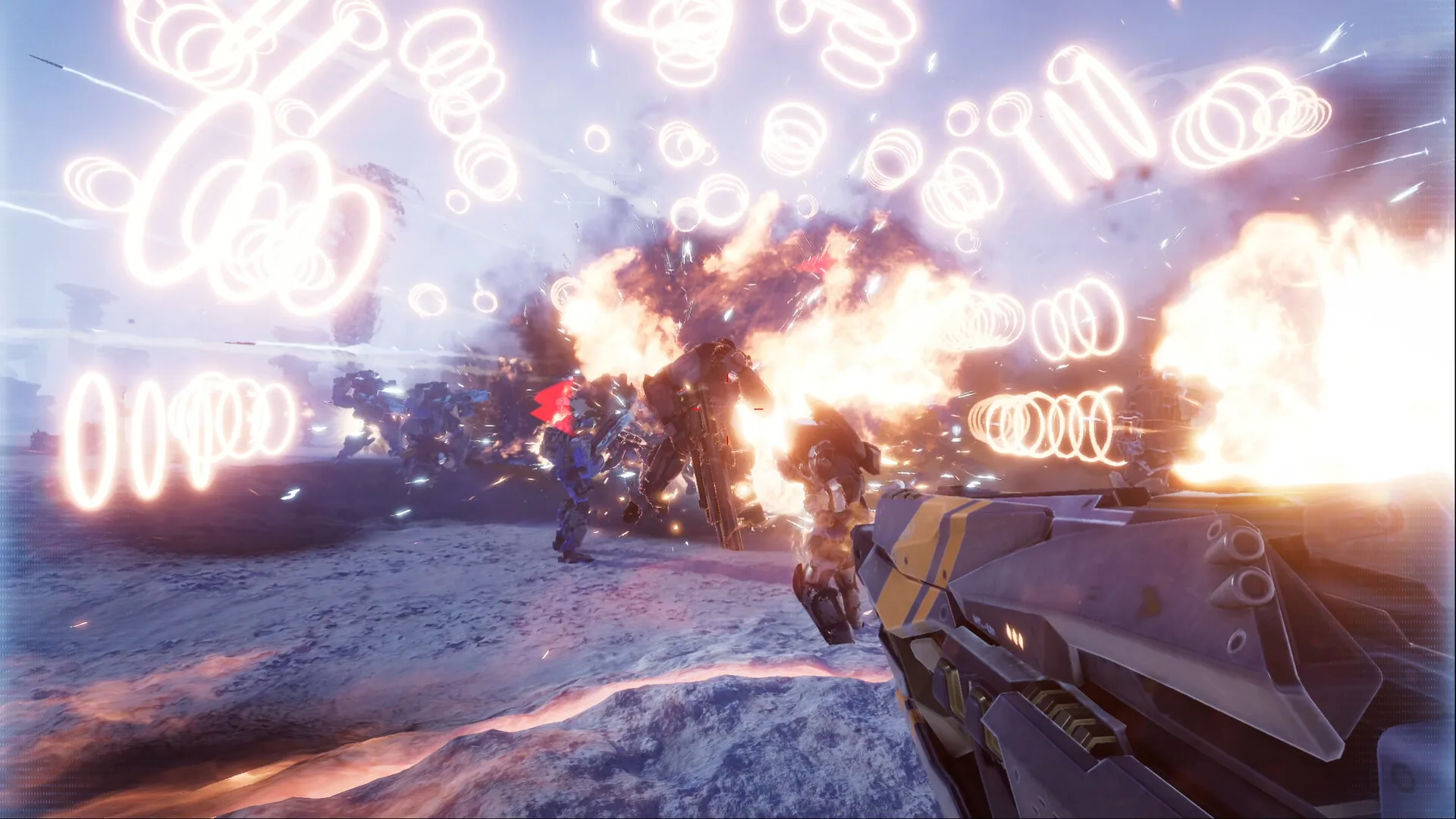
Combat is the point where the colony’s political and industrial choices become immediate. The current record describes first-person battles led with troops, tanks and mechs, then adds capture and conversion and several core families that modify the next encounter. The shape is hybrid by design: a player can read the battlefield as a troop operation, a mechanized escalation and a roguelite progression decision at the same time.
This page keeps those layers separate enough to use. Infantry is the entry point for first-person battles. Tanks and mechs expand the scale of force. Capture and conversion changes the troop pool by turning captured enemies into true believers. Weapon cores and troop-support cores carry progression into the fight, while Sector Overlords define the threat side of the record with bullets, lasers, missiles, drones and artillery.
The source supports a relationship between these pieces, not a complete damage model or a universal core tier list. Read the system rows as a field map: each row tells you what the system is for and where it connects. Version labels remain close because an Early Access battlefield is a moving record.
ENGAGEMENT 01 / TROOP FRONT
First-person battles start with the troop front
Infantry is recorded as a troop type used to lead soldiers into first-person battles. That sentence sets the operating perspective: the player is not only assigning a distant army, but entering the battle space with the troop layer in view. It also gives the colony page a clear handoff. Citizens and conscription establish the available personnel; combat is where that personnel becomes a force that must survive a direct encounter.
The first-person layer should be read as a front rather than a complete list of weapons or enemy numbers. The captured material identifies the mode and the connection to capture and conversion, but it does not publish a full arsenal table or a fixed encounter script. That restraint is useful. It leaves room for the current build to change while preserving the player task: understand which troops are being led, what the engagement can become, and what progression may return to the colony.
The battlefield can escalate. Tanks are recorded as mechanized units that increase force, and mechs as mechanized units that participate in large-scale war. Those rows are not redundant variants of infantry. They mark a change in scale and connect the battle to Sector Overlords, the boss threat named in the same record family. Use the mode column to see the escalation before making a core choice.
CORE 02 / ROGUELITE LAYER
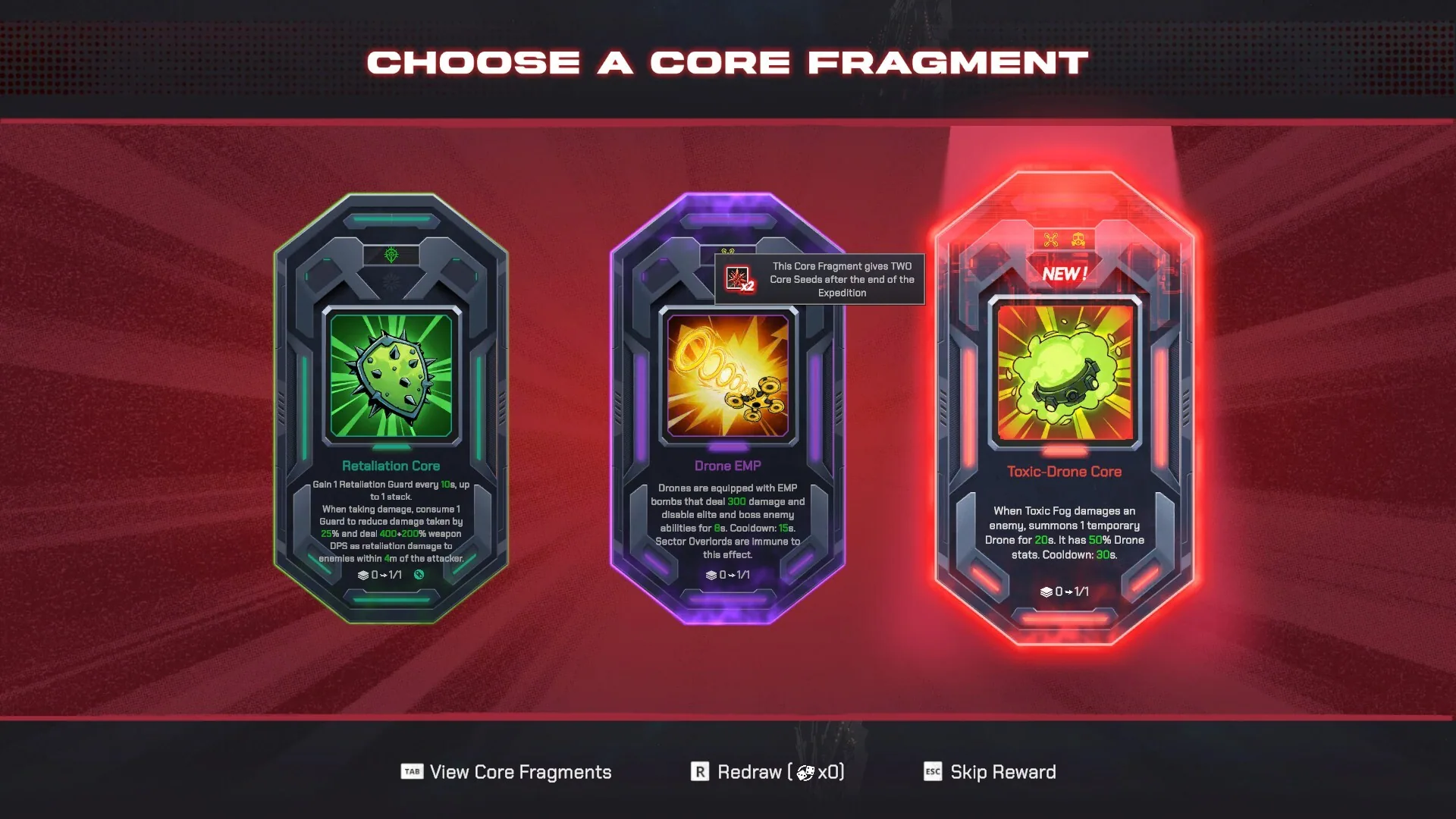
Cores change the next battle
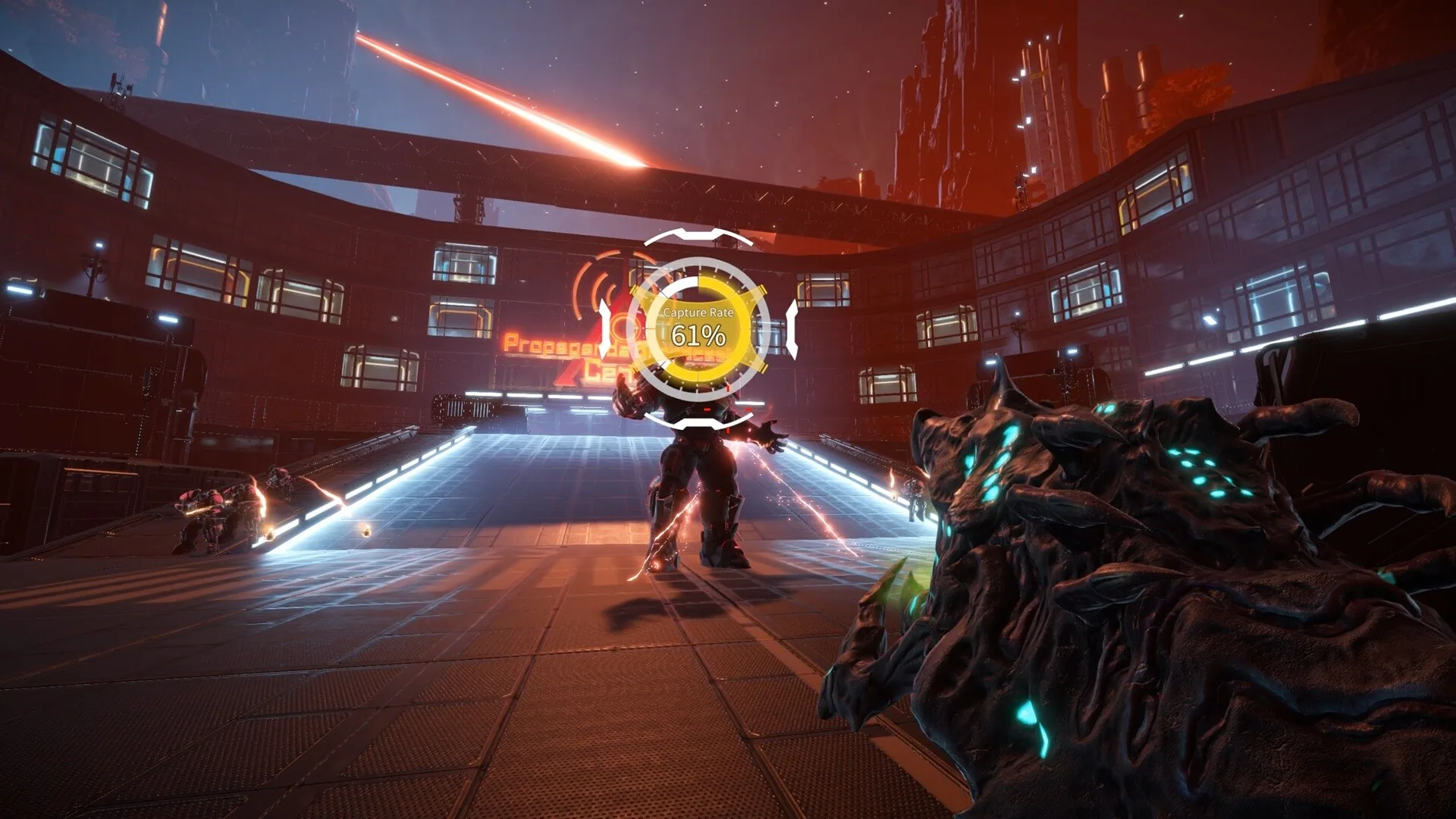
The core layer is the roguelite hinge of the combat record. Weapon cores modify weapon progression, while troop-support cores support the troop layer. Capture and conversion sits between combat and progression: the player captures enemies and converts them into true believers, which changes the available support around a future battle. The record also names combination cores in the broader loop, keeping the progression layer connected to more than one weapon screen.
A useful reading order is to start with the action, then the layer it changes. Ask whether the choice modifies a weapon, supports troops or expands the believer pool. This is more stable than inventing a ranking of cores because the captured evidence names functions, not a universal best selection. It also keeps the colony connection visible: a progression result can change the next battlefield without erasing the social and production pressures that prepared it.
The core selection image belongs to this route because it shows the decision surface, not because it proves an unrecorded numeric effect. Treat the visual as an official media reference and the system rows as the readable contract. Together they explain why combat is both a direct encounter and a repeatable progression loop.
infantry
official combat description
lead soldiers into first-person battlestanks
official combat description
escalate battlefield forcemechs
official combat description
participate in large-scale warcapture and conversion
official combat description
turn captured enemies into true believersweapon cores
official core description
modify weapon progressiontroop support cores
official core description
support the troop layerSector Overlords
official combat description
face bullets, lasers, missiles, drones and artilleryTHREAT 03 / ESCALATION
Sector Overlords and the threat field
Sector Overlords are recorded as a boss threat whose attack vocabulary includes bullets, lasers, missiles, drones and artillery. That is a threat profile rather than a numeric encounter guide. It tells the player that the battlefield can fill with different forms of pressure and that the mechanized escalation is not merely cosmetic. Infantry, tanks and mechs are read against the type of threat they are being asked to face.
The combat route therefore treats escalation as a relationship. Infantry opens the first-person front. Tanks and mechs widen the force and point toward large-scale war. Sector Overlords put that force under a mixed projectile and support threat. Capture, conversion and cores then give the player ways to carry a result forward. No single row promises a solution to every boss situation; the value is in seeing the whole chain before choosing what to read next.
When a run returns to the colony, the loop closes through the troop pool, believer pool and resource system. The next decision may be a work assignment, a policy, a new expedition or a core choice. This page records the battlefield end of that cycle and keeps its version boundary beside the current Early Access marker, so the player can distinguish a current system from a historical image or a future plan.
FIELD NOTE / ENGAGEMENT ORDER
How to use the combat brief
Start with the troop front when the question is who enters the battle. Move to the core architecture when the question is what changes the next encounter. Read the threat field when the question is why a fight escalates from a direct infantry action into mechanized pressure and a boss threat. The official images in the media strip show those surfaces without claiming to be a complete strategy manual.
Finally, return to the colony page for the inputs behind the force. The combat record is strongest when it remains connected to the state loop: citizens become troops, work becomes supplies, capture becomes conversion, and cores make the following battle different. That is the useful boundary of this page—enough structure to orient a player, without replacing the source with invented numbers. Keep the version marker beside the question, because Early Access records can move as corrections and new encounters arrive.
The route is bounded to the captured official store and publisher record for the current version line.